Nobody warns you about the lake. Term starts in the last week of August, Rotterdam is still warm, and the Kralingse Plas turns out to be a short ride from the lecture hall. A couple of weeks later you are sitting with a group you have just met, arguing about how to measure something.
You meet the cohort before you plan to
It starts before the timetable does. Eurekaweek, the university’s introduction week, runs from 17 to 19 August 2026 and takes master’s students, not just first-year bachelors. Then block 1 puts the whole cohort in the same three courses, two of which are graded partly on group work. The introductions happen over an assignment rather than over small talk, which is a faster way to end up with people you actually want to work with.
The rest of it is geography. Café In de Smitse, the campus bar, is in the Hatta building, so the walk from a tutorial to a beer is short. In the warm months student associations throw parties on the lakeside. You do not have to engineer a social life in your first month here; the timetable and the last of the summer do most of it for you.
The first thing you learn is which question to ask
You arrive able to read a number. You leave block 1 able to design a study. That is what Customer Intelligence does to you: you take a vague management problem, turn it into a research question, choose the instrument that can actually answer it, and then say out loud what your design cannot show. Managers ask the first half of that constantly. The second half is the harder habit, and it is what stops a company acting on a number that was never going to hold.
It is taught by Ana Šćekić, assistant professor of marketing. Her own research is on visual attention: how people take information in, and what they miss.
Then two more ways of seeing the same customer
Managing Omnichannel Experiences is the one that changes how you read a company: channel choice, the partners in between, the sales side, and the analytics over the top. It is taught by Sean Brüggemann, assistant professor of marketing, who also teaches Internet Customer Analytics at UCLA.
Branding & Product Management is the course people expect a marketing master to be, and it is taught from the consumer up rather than from the logo down. Brand designers and brand managers come in as guests, and the reading is 35 papers from the leading branding journals, so you hear how real decisions were made and then test them against the evidence. Arie Barendregt, a lecturer in marketing whose registered ancillary activities include the strategy and marketing consultancy Stracom Intelligence, takes it.
Seven weeks, then the exam week
The shape is fixed and it is worth knowing before you arrive: five blocks, each eight weeks, seven of teaching and one of examinations. Block 1 opens with Take-Off Master (FEM61000), the school’s introduction programme: no credits, attendance mandatory.
By the end of October you have three exams behind you, a group you would work with again, and a different reflex when someone shows you a chart. In August you would have asked what the number was. Now you ask who produced it and what would have to be true for it to mean anything. Block 2 hands you the tools to check, in Marketing Analytics and Data Visualisation.
Learn more
What exactly is in block 1?
Three courses of 4 EC each, one per pillar of the programme: Branding & Product Management (FEM11031), Managing Omnichannel Experiences (FEM11219) and Customer Intelligence (FEM11220), plus Take-Off Master (FEM61000) at 0 EC.
How is it graded?
An exam plus coursework in every course. Customer Intelligence: exam 70%, with a minimum of 5.5 on the individual exam, and a group component worth 30% made of two written assignments and a presentation, with peer evaluation. Managing Omnichannel Experiences: exam 60% and an individual assignment 40%, with at least 75% of assignments submitted. Branding & Product Management: open-book exam of ten essay questions 70%, plus two group assignments at 15% each.
Do you choose anything in block 1?
No. All three are core and the whole cohort takes them. Your first choices come in block 2, where you pick electives next to Marketing Analytics and Data Visualisation, and again in block 4, where you pick one specialised seminar. The FAQ has the rest of the structure and the careers page has where it leads.
Read more
- The official programme overview, block by block
- Every course in the specialisation, in the EUR catalogue
- Eurekaweek, the introduction week
Sources and notes
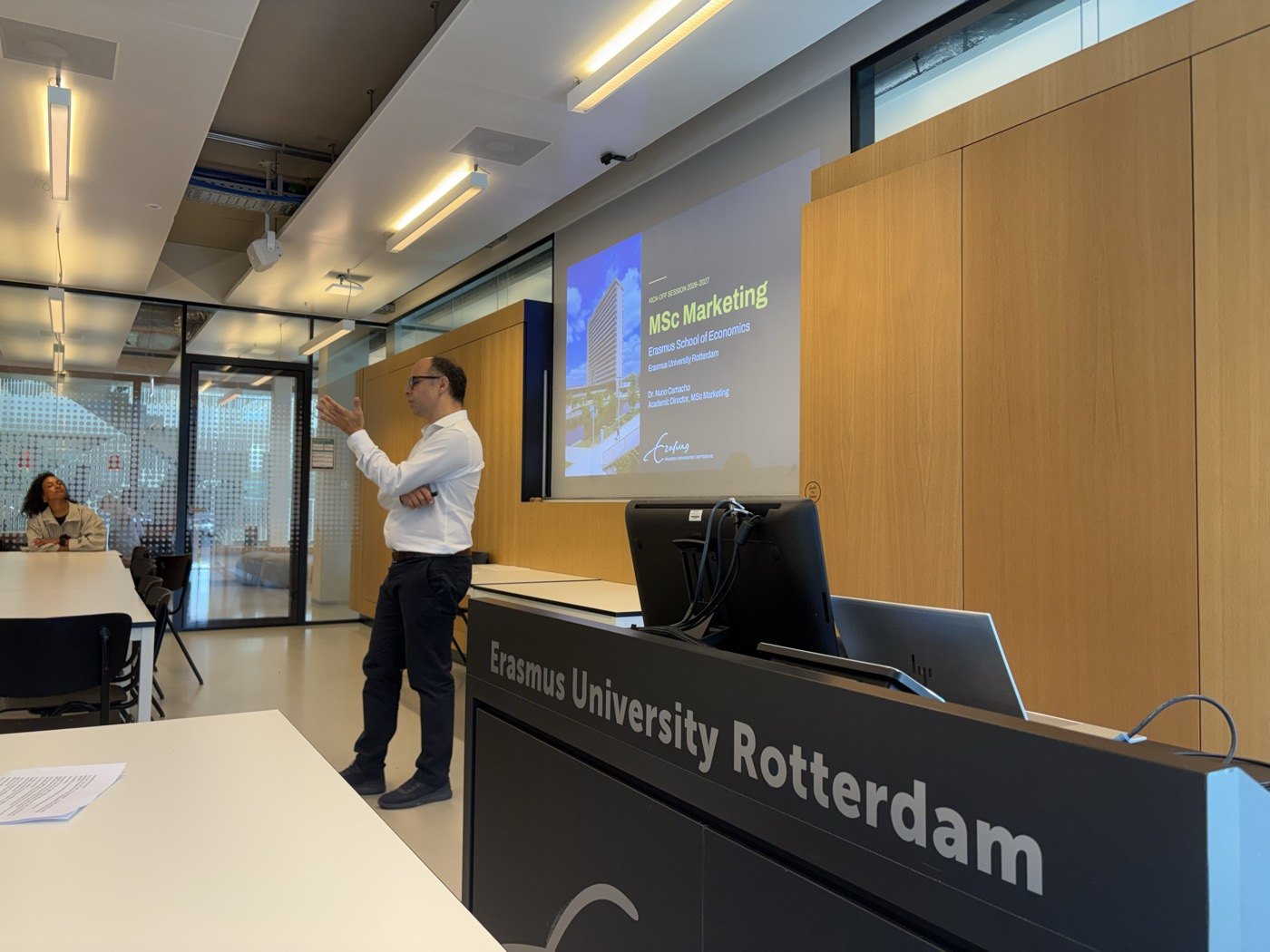
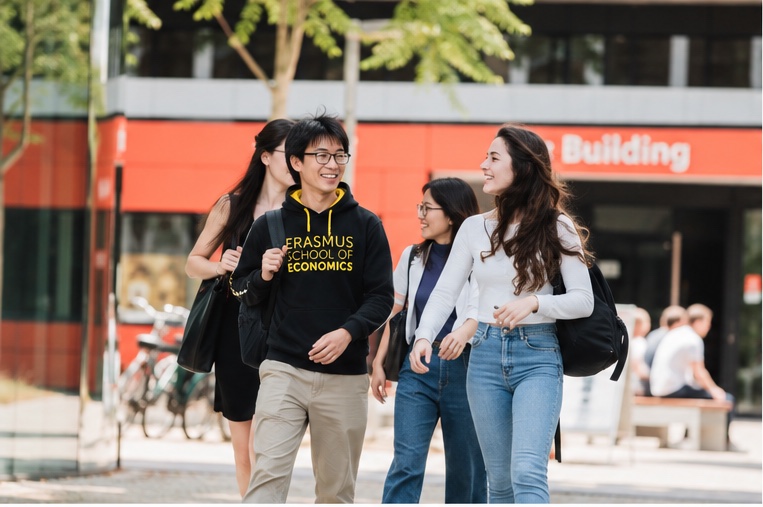
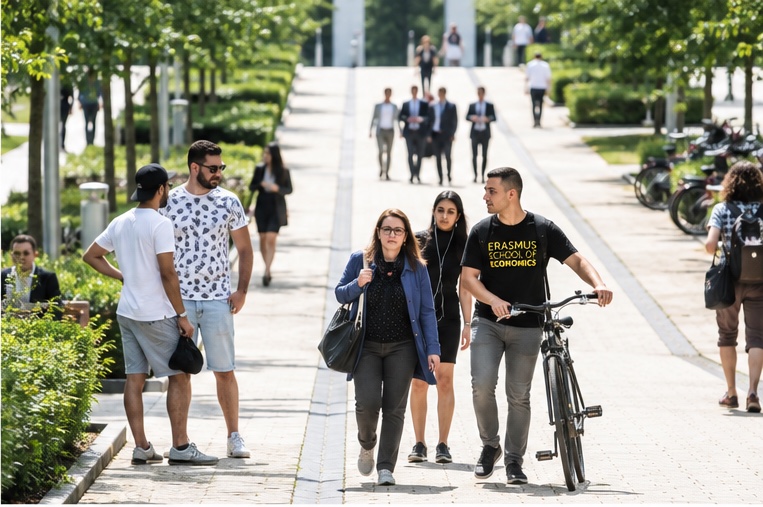
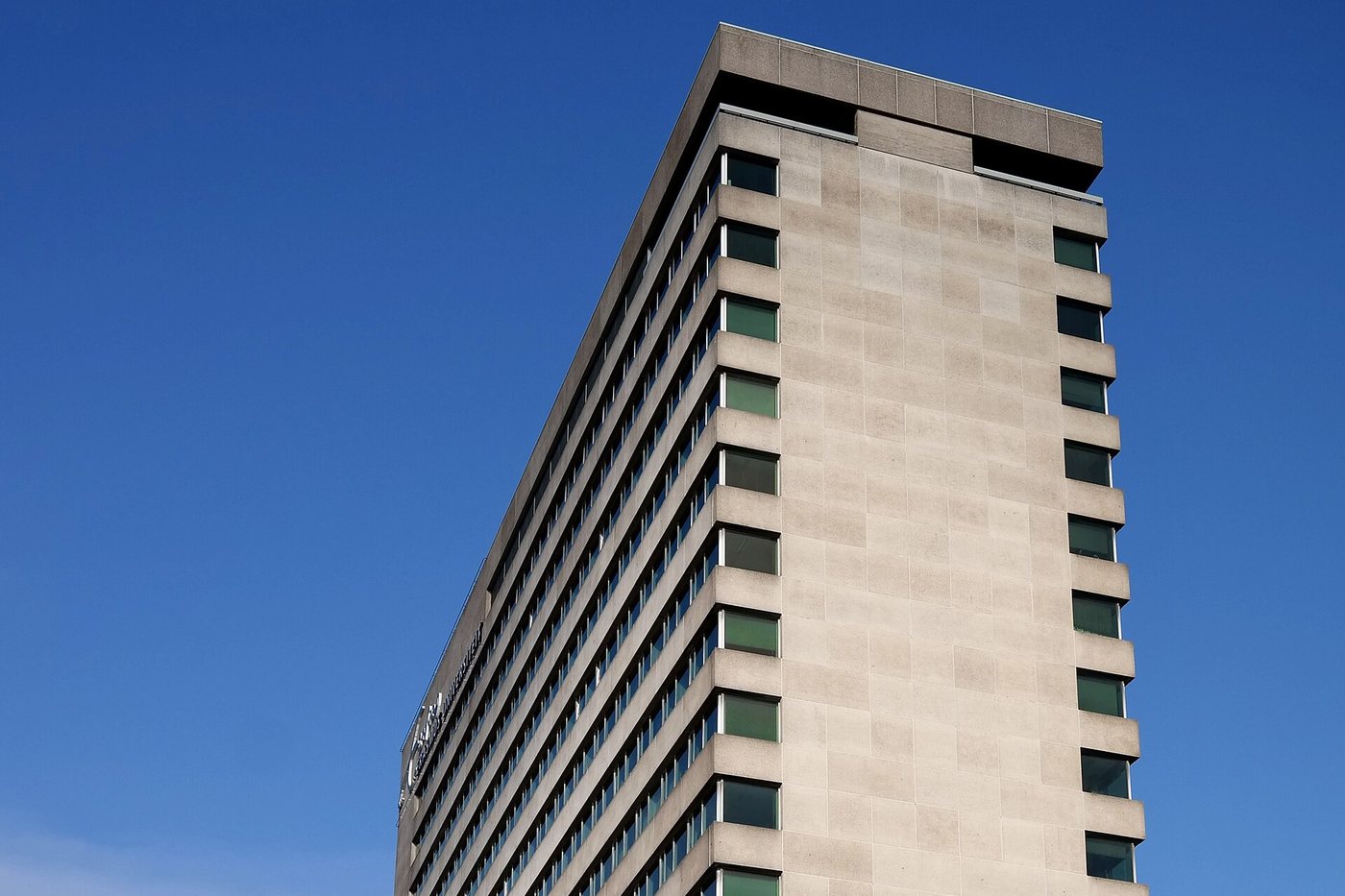
Courses, codes, credits and blocks: the official ESE study schedule for the MSc Economics and Business, specialisation Marketing, 2026-2027. Course content, assessment weights and lecturers: the EUR course catalogue entries for FEM11031, FEM11219, FEM11220 and FEM61000, 2026-2027. Block structure: ESE academic calendar page; the 2026-2027 calendar file is published as a draft, so check it for exact dates. Eurekaweek dates and eligibility: eur.nl. Staff research and teaching: the ESE staff profiles for Ana Šćekić, Sean Brüggemann and Arie Barendregt, with LinkedIn profiles linked from two of those pages. Café In de Smitse and Kralingse Plas: eur.nl and rotterdam.info. The lakeside association parties are a student-life observation, not a university-organised programme. The lead photograph is from the Erasmus University press image bank, credited there to Alexander Santos Lima, reproduced with permission on condition of that credit; it and the photograph of students with a bicycle further down have been adjusted with AI, as the privacy page sets out. The campus photograph is Tinbergen gebouw Erasmus Universiteit by Choinowski, CC BY-SA 4.0, via Wikimedia Commons, cropped and resized, otherwise unaltered, and offered here under the same licence. Course content and assessment can change between intakes; the catalogue is the version that counts.